
The stability and sustainable development of a new Middle East cannot be achieved in isolation from the stability of Iraq. Iraq, long considered the Eastern Gateway to the Arab Nation, now holds the key to the region’s safety valve. Its strategic location makes it not merely a geographical area, but a vital fulcrum for establishing the principle of a national state over the chaos of statelessness, factions, and militias that threaten regional security and stability. Iraq’s stability directly translates to the stability of the entire region, and vice versa.
Historically, Iraq has served as a crucial transit point connecting East and West. From the ancient Incense Route, which linked India and the UAE by sea, then overland through Saudi Arabia to Mediterranean ports and Europe, to promising modern projects. Today, two ambitious logistical projects dominate the economic landscape, holding significant promise for the region:
The India-Middle East-Europe Economic Corridor (IMEC): This can be seen as the modern extension of the Incense Route, connecting India by sea via the UAE (Fujairah Port and the national railway project), then overland through Saudi Arabia, reaching Mediterranean ports and onward to Europe. This corridor aims to facilitate smooth trade and energy flow.
The Development Road Project: This vital project connects the Gulf waters by sea through Iraq’s Grand Faw Port in the south, then overland through Iraqi territory to Turkey and finally Europe. This route represents a qualitative addition to the global transport network, contributing to the enhanced flow of trade and oil.
These vital routes, which are lifelines for global economic growth and stability, face an existential threat. The “Axis of Resistance,” coupled with Iran’s expansionist revolutionary ideology and its proliferating proxies, has consistently and continues to obstruct this desired development and undermine regional stability. Iraq, as the gateway and safety valve, is the most adversely affected by these subversive agendas. Iranian presence and hegemony directly undermine all current and future development plans, jeopardizing security and peace in this critical region of the world.
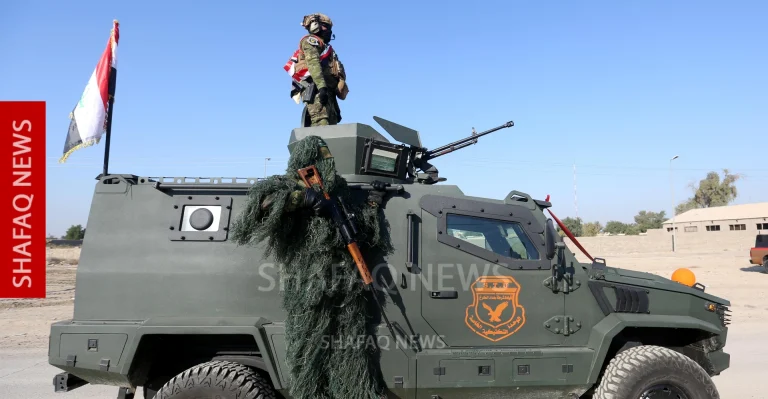
It has become evident that the current situation in Iraq, marked by the dominance of militias and their allegiance to external agendas, serves neither the interests of the Iraqi people nor those of neighboring countries. This reality obstructs any developmental or stabilizing initiatives in the region, including reconstruction efforts in Syria. The core dilemma lies in the absence of a national Iraqi entity capable of taking control and leading the country towards genuine sovereignty, free from regional interference.
Iranian-Israeli-American Escalation: The Inevitability of Change in Iraq and the Urgent Need for Support
The ongoing escalation between Iran on one side and the United States, Israel, and Europe on the other clearly indicates that the region stands on the cusp of a decisive phase. Following the resolution of the Gaza and Hamas file, attention is shifting towards developments that could significantly weaken Iran, either through its submission to international pressure or its defiance, leading to the collapse of its regime and all its ideological underpinnings. This scenario, which all analyses suggest is imminent, inevitably means the collapse of the current Iraqi system, which relies entirely on Iranian-backed militias and proxies.
This historic moment necessitates immediate and decisive action. Should Iranian influence wane, the resulting vacuum in Iraq will imperatively demand a strong and legitimate national alternative capable of filling this void and rebuilding the state.
The National Council for Iraqi Opposition (NCIOIQ.org): The Reliable National Alternative and an Absolute Necessity
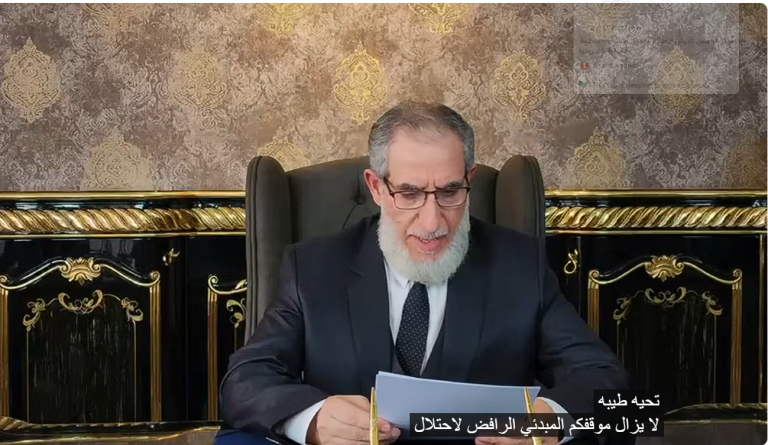
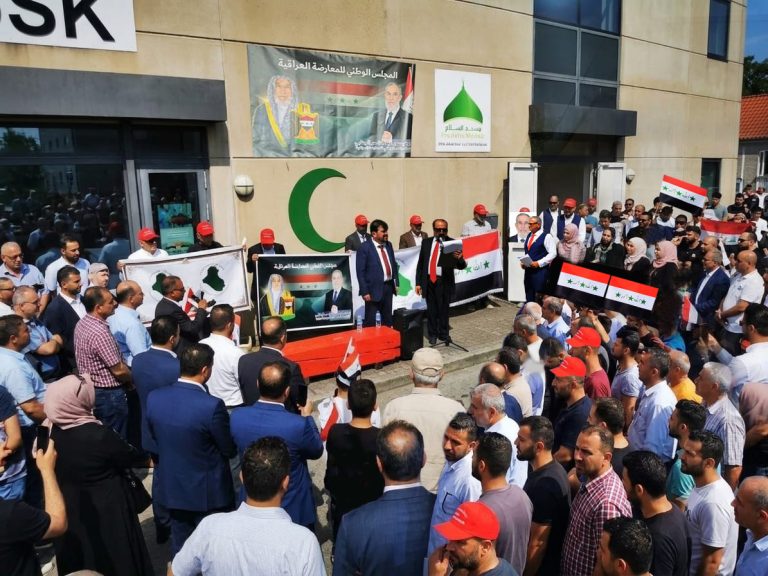
Amidst this accelerating landscape, the National Council for Iraqi Opposition, led by Professor Dr. Abdul Naser Al-Janabi, emerges as an absolute necessity, not merely a tactical option. This Council, which field observations and political analyses indicate represents the largest and most legitimate force among the spectrum of national opposition factions, is the sole entity qualified to assume responsibility at this pivotal juncture. The National Council for Iraqi Opposition enjoys broad and deep penetration across the fabric of Iraqi society, encompassing all its segments and sects, from Faw in the south to Mosul and Zakho in the north. It functions as a unifying national umbrella that accommodates all national orientations, rejecting Iranian hegemony and the corruption of the current political process.
For two decades, and since its formal establishment in 2014, the National Council has steadfastly worked to unify the national sentiment of Iraqis and instill their loyalty to the Iraqi nation, free from any sectarian or ethnic distinctions. The National Council encompasses over 78 active national entities, affirming its role as a legitimate and effective representative of the national Iraqi opposition, and the only institution capable of assuming power and guiding the country towards genuine sovereignty. The National Council’s leadership, which chose to oppose from abroad after witnessing the rampant administrative corruption and the militias’ control over national decision-making, possesses the necessary political experience and strategic vision.
A Call for Comprehensive International Support: Mechanisms of Action and a Guarantee for Global Stability and Development
Herein lies the critical importance of the role of the Gulf Cooperation Council (GCC), Turkey, and all nations benefiting from the stability of the Middle East, particularly Europe, which is a primary recipient and consumer of goods from the East, and seeks to smoothly deliver its own products to the Middle East. Their endorsement and support for the Iraqi National Opposition Council are no longer options, but rather an urgent strategic imperative that directly serves their security and economic interests. This support must be comprehensive, multifaceted, and expedited, as time is of the essence. It requires clear mechanisms to ensure its effectiveness and direct impact on the ground:
Robust Political and Diplomatic Support:
Mechanism of Action: Initiate intensive diplomatic campaigns in international forums (UN, Security Councils, regional organizations) to recognize the Iraqi National Opposition Council as a key political force and a legitimate representative of the Iraqi people’s aspirations. Organize high-level meetings with international leaders and senior officials to present the Council’s vision and plans, accelerating these diplomatic endeavors.
Objective: Legitimizing the Council internationally as a genuine alternative to the current government, which has lost its popular legitimacy due to fraud and foreign subservience, and presenting the Council to key capitals as a trusted partner representing the Iraqi people’s aspirations for sovereignty and stability.
Financial Support to Strengthen Internal Networks:
Mechanism of Action: Provide direct and transparent financial support to the National Council, specifically earmarked for strengthening and empowering its member networks and supporters within Iraq. This support includes funding awareness campaigns, organizing both clandestine and overt public gatherings where possible, and providing necessary resources for organizational infrastructure to ensure full readiness to assume power at the crucial moment, prioritizing rapid and effective financial flows.
Objective: Enhancing a solid and effective popular and organizational base within Iraq, capable of mobilization and preparing the ground for a peaceful transition of power.
Intensive Logistical and Media Support:
Mechanism of Action: Provide advanced media platforms (satellite channels, digital platforms, social media) affiliated with these supporting nations, enabling the Council to convey its voice and vision to the Iraqi people and the international community. Organize training workshops for Council members in communication and digital media. Host regular, extensive conferences and meetings in supporting capitals that bring together the Council’s various components to unify visions and develop action plans, providing the necessary logistical facilities, thus ensuring maximum speed in delivering the message and building momentum.
Objective: Exposing the practices of militias and the corruption of the current government, and strengthening a strong popular support base for the Council, both domestically and abroad.
Coordination with Influential International Powers:
Mechanism of Action: Establish joint working groups between supporting nations (GCC, Turkey, Europe, and the United States) for direct strategic coordination at an accelerated pace. Increase pressure on the militia government in Baghdad through targeted sanctions, freezing assets of officials involved in corruption and allegiance to Iran, and gradually withdrawing international recognition. Support and expedite the American resolution project aimed at liberating Iraq from Iranian hegemony by providing political cover and intelligence support.
Objective: Undermining the influence of the current Iranian-backed regime and establishing a path to empower a genuine national alternative before it is too late.
Support for Strengthening the State, Institutions, and Iraq’s Future Vision:
Mechanism of Action: Provide advisory and technical expertise to the National Council in formulating detailed plans for strengthening the Iraqi state-building process. Organize training and capacity-building programs in good governance, resource management, anti-corruption efforts, and security sector reform to ensure weapons are exclusively in the hands of the national army. Facilitate engagement with international donor institutions to ensure support for sustainable economic development programs that benefit all citizens and guarantee the provision of essential services. The Council, with the support of these nations, commits to respecting its neighbors and maintaining non-alignment with any regional axis.
Objective: Enhancing the Council’s capabilities for effective and rational governance upon assuming power, and ensuring a smooth and stable transition in the shortest possible time. Furthermore, the Council’s possession of a conscious and geopolitically savvy technocratic class enhances its ability to effectively navigate regional and international challenges and opportunities, providing wise leadership for a future Iraq.
A Stable Iraq: A Pillar for the New Middle East and Global Development
Investing in Iraq’s stability, through supporting the Iraqi National Opposition Council, is an investment in the national security of GCC countries and Turkey, an investment in the future of the entire region, and indeed, in the stability of global trade and the smooth flow of goods and energy to and from Europe. Ignoring the Iraqi reality means that any efforts to achieve stability and development in Syria or elsewhere will remain vulnerable to continuous undermining by forces that benefit from Iraq’s chaos. An Iraq with free and independent sovereignty is a pillar for the security and stability of the entire region, and an essential prerequisite for the unimpeded flow of trade and energy through its vital arteries between East and West.
This is a pivotal moment that calls upon the GCC, Turkey, and all partners for stability worldwide to intensify and significantly accelerate their efforts to empower the legitimate representative of the Iraqi people, the National Opposition Council, to restore Iraq’s sovereignty and establish the principle of a state over statelessness, factions, and militias.
As an Iraqi Canadian, Iraq is deeply ingrained in my identity. The rich history, vibrant culture, and the resilience of its people inspire and drive me every day. Yet, Iraq has faced decades of conflict and instability, which have taken a significant toll on its citizens and the region as a whole. I yearn for peace and justice not only for Iraq but for the entire world, believing that a stable Iraq is pivotal to the peace and prosperity of the Middle East.
The National Council for Iraqi Opposition (NCIO) is committed to advocating for a free, inclusive, and democratic Iraq. With branches established in Canada and Iraq, the organization works tirelessly to represent all Iraqis in their quest for peace, equity, and justice. We believe that empowering the voices of those seeking change is critical to forging a new path for Iraq—one that prioritizes human rights, democratic governance, and regional stability.
Iraq needs international support more than ever. Rigorous efforts are necessary to tackle corruption, enhance infrastructure, provide education, and build economic opportunities. The NCIO aims to promote these initiatives by communicating with key stakeholders, raising awareness, and mobilizing support for policies that foster sustainable development and peace.