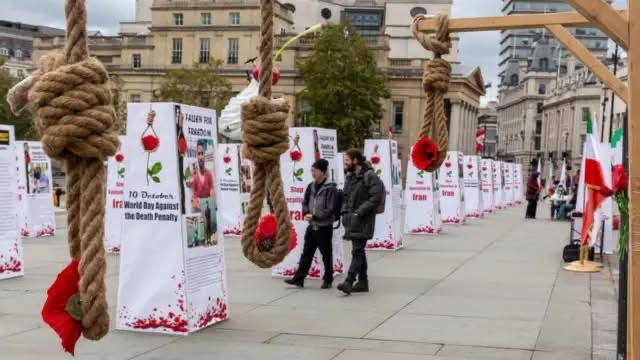
منذ عام 1979، تحوّلت إيران إلى منصة دموية لتصفية المعارضين السياسيين، عبر محاكمات صورية، وإعدامات سرية، وتعذيب ممنهج. وفي العراق، ورثت بعض الحكومات بعد 2003 نفس أدوات القمع، وإن اختلفت الشعارات، فالممارسة واحدة:
تكميم الأفواه
تصفية الناشطين
توظيف القضاء لتصفية الخصوم
أكثر من 1200 إعدام سياسي في إيران خلال عام 2025 فقط عشرات المعتقلين في العراق مهددون بالإعدام بتهم سياسية مغلّفة بقانون الإرهاب
من جاء بالملالي؟ ومن سلّم العراق للنفوذ؟
الخميني وخامنئي ورفسنجاني لم يأتوا من فراغ، بل من هندسة دولية سمحت لهم بالسيطرة على إيران بعد سقوط الشاه
الولايات المتحدة وفرنسا وبريطانيا غضّت الطرف عن مشروع “ولاية الفقيه”، بل وفّرت له المنصات الإعلامية
في العراق، بعد 2003، تم تفكيك الدولة وتسليمها لأحزاب مرتبطة بإيران، مما مهّد لتكرار النموذج القمعي
من جاء بالملالي؟ جاء بهم الفراغ السياسي، والدعم الغربي، والتواطؤ الإقليمي، والصمت الدولي.
هل هي مؤامرة دولية لتدمير الشعبين؟
الوقائع تشير إلى أن ما يحدث ليس مجرد “تقصير حقوقي”، بل هو:
تواطؤ دولي لإبقاء إيران والعراق في حالة ضعف دا
منع أي نهضة شعبية حقيقية
إبقاء الثروات تحت سيطرة أنظمة تابعة
تدمير الهوية الوطنية والدينية عبر القمع والتهميش
الإعدامات السياسية ليست أداة عدالة، بل وسيلة لتدمير الإنسان، وكسر إرادة الشعوب.
متى تتوقف الإعدامات الجائرة؟
الإعدامات السياسية في إيران والعراق لن تتوقف إلا إذا تحقق ما يلي:
- فصل القضاء عن السلطة السياسية
العدالة تبدأ من استقلال القضاء، لا من تبعيته للحزب أو المذهب أو المخابرات. - إلغاء الإعدام كأداة سياسية
يجب أن يُمنع استخدام الإعدام ضد المعارضين، الناشطين، والمظلومين، ويُبقى فقط للجرائم الكبرى بعد محاكمة عادلة. - تدويل ملف الإعدامات
رفع الملف إلى محكمة الجنايات الدولية، وتشكيل لجنة تحقيق مستقلة من الأمم المتحدة. - ضغط شعبي وإعلامي مستمر
الشعوب يجب أن تُطالب بحقها في الحياة والكرامة، وتُدين كل حكم إعدام سياسي، وتفضح الصمت الدولي. - تفكيك شبكات النفوذ الإقليمي
لا يمكن وقف الإعدامات ما دامت إيران تُدير ملفات القضاء والسجون في العراق، وما دام النظام الإيراني قائمًا على تصفية المعارضين.
توصيات التقرير:
إطلاق حملة دولية لوقف الإعدامات السياسية فورًا
توثيق كل حالة إعدام سياسي في إيران والعراق
مطالبة الأمم المتحدة بتحقيق دولي عاجل
دعوة الشعوب العربية والإسلامية للتضامن مع المظلومين
فضح الصمت الأمريكي والأوروبي في المحافل الحقوقية
خاتمة التقرير:
الإعدام السياسي ليس نهاية حياة… بل نهاية وطن. ومن يُعدم الإنسان، يُعدم الحرية، ويُعدم المستقبل.
إن ما يحدث في إيران والعراق من إعدامات سياسية ممنهجة، وما يُقابلها من صمت دولي، يُعد جريمة مزدوجة: جريمة القتل، وجريمة التواطؤ.
والتاريخ لن يرحم من سكت، كما لن ينسى من قاوم.
لكن السؤال الذي يجب أن يُطرح اليوم، لا غدًا:
هل سيظل العرب يتفرجون واقفين؟ أم أن ساعة الصحوة قد حانت، قبل أن يُغتال الضمير، وتُغلق أبواب النجاة؟
English Translation
Since 1979, Iran has become a bloody platform for eliminating political opponents — through show trials, secret executions, and systematic torture. In Iraq, some post-2003 governments inherited the same tools of repression. The slogans may differ, but the practice is the same:
- Silencing voices
- Eliminating activists
- Weaponizing the judiciary to eliminate opponents
Over 1,200 political executions in Iran in 2025 alone Dozens of detainees in Iraq face execution on politically motivated charges disguised under anti-terror laws.
Who brought the mullahs? Who handed Iraq over to foreign influence? Khomeini, Khamenei, and Rafsanjani did not emerge from a vacuum — they were the product of international engineering that enabled them to seize Iran after the Shah’s fall.
The United States, France, and Britain turned a blind eye to the “Wilayat al-Faqih” project — even offering it media platforms.
In Iraq, after 2003, the state was dismantled and handed to parties aligned with Iran, paving the way for a repeat of the repressive model.
Who brought the mullahs? They came through political vacuum, Western support, regional complicity, and international silence.
Is this a global conspiracy to destroy two nations?
The facts suggest this is not mere “human rights negligence,” but rather:
- International complicity in keeping Iran and Iraq weak
- Preventing any genuine popular awakening
- Keeping wealth under the control of proxy regimes
- Destroying national and religious identity through repression and marginalization
Political executions are not instruments of justice — they are tools to destroy human dignity and break the will of nations.
When will the unjust executions stop?
Political executions in Iran and Iraq will not end unless the following is achieved:
- Separation of judiciary from political power Justice begins with judicial independence — not allegiance to party, sect, or intelligence services.
- Abolishing execution as a political weapon Execution must never be used against dissidents, activists, or the oppressed — only for major crimes after fair trials.
- Internationalizing the execution file The issue must be referred to the International Criminal Court, with an independent UN investigation committee.
- Sustained public and media pressure People must demand their right to life and dignity, condemn every political death sentence, and expose global silence.
- Dismantling regional influence networks Executions will not stop as long as Iran controls Iraq’s judiciary and prisons, and as long as the Iranian regime is built on eliminating opposition.
Report Recommendations:
- Launch an international campaign to immediately halt political executions
- Document every political execution in Iran and Iraq
- Urge the United Nations to conduct an urgent international investigation
- Call on Arab and Muslim peoples to stand in solidarity with the oppressed
- Expose American and European silence in human rights forums
Report Conclusion:
Political execution is not the end of a life — it is the end of a nation. To execute a human is to execute freedom… and the future.
What is happening in Iran and Iraq — systematic political executions met with global silence — is a double crime: the crime of killing, and the crime of complicity.
History will not forgive those who stayed silent, just as it will never forget those who resisted.
But the question that must be asked today — not tomorrow — is:
Will Arabs remain passive spectators? Or has the hour of awakening come, before conscience is assassinated and the gates of salvation are shut?
🇫🇷 French Translation
Depuis 1979, l’Iran est devenu une plateforme sanglante pour éliminer les opposants politiques — par des procès-spectacles, des exécutions secrètes et une torture systématique. En Irak, certains gouvernements post-2003 ont hérité des mêmes outils de répression. Les slogans changent, mais la pratique reste la même :
- Museler les voix
- Éliminer les militants
- Utiliser la justice pour liquider les opposants
Plus de 1 200 exécutions politiques en Iran rien qu’en 2025 Des dizaines de détenus en Irak risquent la peine de mort pour des accusations politiques déguisées en infractions terroristes.
Qui a amené les mollahs au pouvoir ? Qui a livré l’Irak à l’influence étrangère ? Khomeiny, Khamenei et Rafsandjani ne sont pas venus de nulle part — ils sont le fruit d’une ingénierie internationale qui leur a permis de prendre le pouvoir après la chute du Shah.
Les États-Unis, la France et le Royaume-Uni ont fermé les yeux sur le projet de la “Wilayat al-Faqih” — allant jusqu’à lui offrir des tribunes médiatiques.
En Irak, après 2003, l’État a été démantelé et remis à des partis liés à l’Iran, ouvrant la voie à la reproduction du modèle répressif.
Qui a amené les mollahs ? Ils sont venus par le vide politique, le soutien occidental, la complicité régionale et le silence international.
Est-ce un complot mondial pour détruire deux peuples ?
Les faits montrent qu’il ne s’agit pas d’un simple “manquement aux droits humains”, mais bien de :
- Complicité internationale pour maintenir l’Iran et l’Irak dans la faiblesse
- Empêcher toute véritable renaissance populaire
- Garder les richesses sous contrôle de régimes affiliés
- Détruire l’identité nationale et religieuse par la répression et la marginalisation
Les exécutions politiques ne sont pas des instruments de justice — mais des moyens de détruire l’humain et de briser la volonté des peuples.
Quand cesseront les exécutions arbitraires ?
Les exécutions politiques en Iran et en Irak ne cesseront que si les conditions suivantes sont réunies :
- Séparation du pouvoir judiciaire du pouvoir politique La justice commence par l’indépendance des juges — non par leur soumission au parti, à la secte ou aux services secrets.
- Abolition de la peine de mort comme arme politique L’exécution ne doit jamais être utilisée contre les opposants, les militants ou les innocents — seulement pour les crimes majeurs, après un procès équitable.
- Internationalisation du dossier des exécutions Porter l’affaire devant la Cour pénale internationale, et former une commission d’enquête indépendante sous l’égide de l’ONU.
- Pression populaire et médiatique continue Les peuples doivent revendiquer leur droit à la vie et à la dignité, condamner chaque peine de mort politique, et dénoncer le silence mondial.
- Démantèlement des réseaux d’influence régionaux Les exécutions ne cesseront pas tant que l’Iran contrôle la justice et les prisons en Irak, et tant que le régime iranien repose sur l’élimination des opposants.
Recommandations du rapport :
- Lancer une campagne internationale pour l’arrêt immédiat des exécutions politiques
- Documenter chaque cas d’exécution politique en Iran et en Irak
- Demander une enquête internationale urgente par l’ONU
- Appeler les peuples arabes et musulmans à la solidarité avec les opprimés
- Dénoncer le silence américain et européen dans les instances des droits humains
Conclusion du rapport :
L’exécution politique n’est pas la fin d’une vie… mais la fin d’une nation. Celui qui exécute un être humain exécute la liberté… et l’avenir.
Ce qui se passe en Iran et en Irak — des exécutions politiques systématiques face à un silence mondial — constitue un double crime : le crime du meurtre, et celui de la complicité.
L’histoire ne pardonnera pas à ceux qui se sont tus, comme elle n’oubliera pas ceux qui ont résisté.
Mais la vraie question, à poser aujourd’hui — pas demain — est :
Les Arabes resteront-ils spectateurs ? Ou l’heure du réveil a-t-elle enfin sonné, avant que la conscience ne soit assassinée et que les portes du salut ne se referment ?
About the Author